Our Leadership & Team

Tshaka Cunningham, PhD
Co-founder & Chief Scientific Officer of Polaris Genomics, Dr. Tshaka J. Cunningham, a graduate of Princeton University, earned his doctoral degree in molecular biology, with a focus on virology, from Rockefeller University in New York. He completed his postdoctoral training in immunology and tumor immunotherapy at the Pasteur Institute in Paris, France, and at the U.S. National Institutes of Health in Bethesda, Maryland. Dr. Cunningham previously worked at the U.S. Department of Veterans Affairs (VA), overseeing a federally funded national research program in the Aging and Neurodegenerative Diseases Rehabilitation Research Program. While at the VA, Dr. Cunningham convened the Million Veteran Program Diversity Working Group and served as a subject matter expert for the VA’s Genomic Medicine Implementation Program. Motivated by the timely need for advancements in diversity and inclusion in precision medicine, Dr. Cunningham co-founded and serves as the Executive Director of the Faith Based Genetic Research Institute, a community-based non-profit organization dedicated to improving people’s lives through the power of genomics and precision medicine. A leading voice advocating for diversity and representation in genomics, Dr. Cunningham also serves as a board member of the Future Kings STEM training program, a STEM-focused nonprofit organization for youth from underserved communities in the DC metropolitan area.

Dr. Luisel Ricks-Santi, PhD, BS
Dr. Ricks-Santi is a cancer genomics researcher and population scientist possessing over 20 years of academic research experience. She is committed to diversity & inclusion through research, education, and training, and is particularly adept in grantsmanship, organizational leadership, clinical-translational methods, and transdisciplinary team science. Dr. Ricks-Santi is a 2000 graduate of Hampton University, where she received her Bachelor of Science degree in Cellular and Molecular Biology. She also received her PhD from Georgetown University in Tumor Biology and completed two post-doctoral fellowships at Howard University in Cancer Genomics/Cancer Disparities research and Clinical-Translational Sciences. Her current research aims to identify the genetic drivers of cancer disparities with a focus on breast and prostate cancer, two (2) cancers with high mortality rates in the African American community. In her spare time, Dr. Ricks-Santi has been using her background in cancer biology to serve her community. She is excited to educate the community about family history, genetics, ancestry, precision medicine, and how these tie to cancer risk. She is a member of Delta Sigma Theta Sorority, Inc., an organization dedicated to implementing programs that address health disparities in the global community.

Tamaro Hudson, PhD, MPH
Dr. Tamaro Hudson is an Associate Professor with Tenure at Howard University in the College of Medicine, Department of Pharmacology. He also has an appointment in the Howard University Cancer Center and an adjunct Associate Professor appointment at Johns Hopkins University School of Medicine. His research focuses on biomarker-based approaches that enable the development of chemopreventive or clinical treatment strategies employing low-toxicity natural and/or conventional agents, and on understanding how they act to suppress, delay, or reverse tumorigenesis in preclinical and clinical cancer models to translate from bench to bedside. Dr. Hudson received extensive training that has advanced his knowledge about the importance of targeting biomarkers through prevention and therapeutic strategies in preclinical and clinical models. Dr. Hudson’s first experience with biomedical research occurred at Iowa State University, where he received a Bachelor of Science in Biology and was involved with isolating different strains of viral glycoprotein from sheep infected with bovine virus. Afterward, Dr. Hudson received an M.S. and a PhD from Ohio State University where he focused on evaluating the functional differences among isothiocyanates in the rat esophageal tumor model. His subsequent cancer prevention fellowship training at the National Cancer Institute focused on evaluating the biological activity of bioactive compounds in cell culture and preclinical cancer models. This work was carried over to Howard University under a Hopkins-Howard-directed U54 project, where he continued to evaluate the biological activity of bioactive compounds and their ability to target cancer-related events and pathways. Also, he was involved in the education component of the U54, serving as the education liaison between Howard and Hopkins. This position broadened Dr. Hudson’s experience in developing didactic training opportunities for pre- and post-doctoral students. In addition to the collaborative efforts of the U54, Dr. Hudson participated in activities related to Georgetown-Howard University's Center for Clinical and Translational Science (GHUCCTS). These collaborative relationships help shape Dr. Hudson’s perspective about the importance of partnerships. Importantly, these partnerships have provided Dr. Hudson the ability to mentor many students from different educational sectors, in and out of the university, including medical students, graduate pharmacy fellows, microbiology graduate students, undergraduate student volunteers from the biology department, and graduate students in the department of chemistry, and high school students from STEM programs. Dr. Hudson’s extensive training in biomedical research has allowed him to receive several grants and awards, and become an active member of several scientific organizations.

Kareem Washington, PhD
Dr. Washington served as Assistant Professor in the Department of Pediatrics and Child Health and Chief of the Division of Genetics & Human Genetics. He also served as Graduate School Chair of the Dept of Genetics and Human Genetics and Director of Graduate Studies at Howard University. Currently, he is Chief Scientist at Splice Therapeutics, where he develops gene therapy products for inherited and acquired diseases. He has contributed to the development of viral vectors that can target blood CD34+ progenitor cells to deliver gene therapy products for the treatment of Sickle Cell Disease. At Splice Therapeutics, he is focused on developing drugs that function to edit genes and RNA using RNA-Trans-splicing technologies for neurologic disorders, blood disorders, acquired viral infections, and muscular dystrophies. In addition, Dr. Washington serves as a scientific advisor of the non-profit Minority Coalition for Precision Medicine; he is a founding member of the Faith Based Genetic Research Institute; and he is collaborating to educate ethnic communities about their genetic background and to take action in Genomic research to improve community health, where he serves as a community advocate.

Sindhu Datla
Sindhu Datla is a doctoral researcher in cell and molecular biology at George Mason University, with a multidisciplinary background spanning pharmacy, molecular science, and nanotechnology. As a data analyst with the Faith Based Genetic Research Institute, she studies genetic variants of unknown significance in prostate cancer associated genes using the NIH All of Us Research Workbench, which aims to make genomic discoveries more accurate and meaningful for diverse and historically underrepresented communities. Her broader research spans mass spectrometry-based diagnostics for Lyme disease and the engineering of pseudovirus assays for antiviral screening, pairing hands-on laboratory science with Python driven data analysis. A published researcher and dedicated educator, she also teaches undergraduate biology and genetics as an adjunct lecturer and teaching assistant, mentoring the next generation of scientists. Motivated by the belief that the benefits of precision medicine should reach every community, Sindhu is excited to share her research and help build a more inclusive future for genomics and human health.
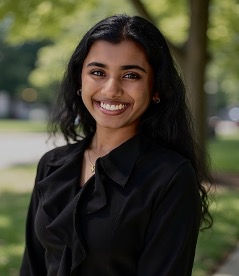
Mahaniya Srinivasan
Mahaniya Srinivasan is a research scientist and a bioinformatics graduate from Virginia Commonwealth University. Her work focuses on making genetics research more inclusive, with the goal of ensuring that the benefits of precision medicine reach all communities. She brings together biology and technology to help close health gaps and promote equity in healthcare. Today, she is excited to share her research and the ways it can help build a more inclusive future for medicine!