The Diversity Gap
Precision medicine tailors treatment to genes, environment, and lifestyle. However, genetic databases conspicuously underrepresent certain populations, risking the worsening of health disparities. Without diverse data, we risk a future where medical breakthroughs fail to serve everyone equally.
“It is not just about your ethnicity—it is all about your genotype.”
86.55%
European ancestry
0.46%
Hispanic or Latin American
11.95%
Asian ancestry
0.4%
African American or
Afro-Caribbean
0.47%
African ancestry
0.17%
Other/Mixed
Our Research: Variants of Unknown Significance in Breast & Prostate Cancer
With support from a grant through the NIH All of Us Research Program, our team is using the program's Researcher Workbench to study how genetic variants linked to breast and prostate cancer differ across populations, turning our core idea, that genomic research must reflect everyone, into real science. As next-generation sequencing becomes routine in cancer care, it is uncovering many "Variants of Unknown Significance" (VUS) that have an unclear health impact, particularly in underrepresented communities. Because today's risk models were built mostly from European-ancestry genomes, these variants may behave differently in other populations, including African Americans. Our project sets out to:

- Examine Variants of Unknown Significance in genes tied to breast and prostate cancer risk and aggressiveness in the African American population.
- Compare whether the VUS burden differs between African American and European American groups.
- Identify population-specific patterns that contribute to disparities in how genetic risk is interpreted.
Our Data Science Interns

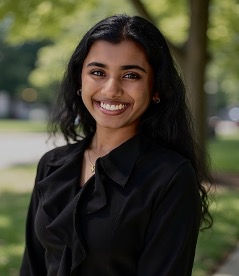
Sindhu Datla
PhD Student
George Mason University
Mahaniya Srinivasan
Research Scientist
Athari Biosciences
Why It Matters
Medical research is a collaborative effort, and its success is measured by the diversity of the populations it serves. Precision medicine is not a one-size-fits-all solution; it is a personalized approach that tailors treatment to an individual's unique genetic makeup, environment, and lifestyle. Without diverse genetic data, we risk perpetuating the very health disparities we seek to eliminate.
By bridging the gap in research participation, we ensure that every breakthrough benefits everyone. When we include historically marginalized communities in the scientific dialogue, we transform the narrative of mistrust into one of empowerment and shared progress. Our mission is to build a future where health equity is not a distant goal, but a reality for all.
